Walking Through Nalanda Mahavihara
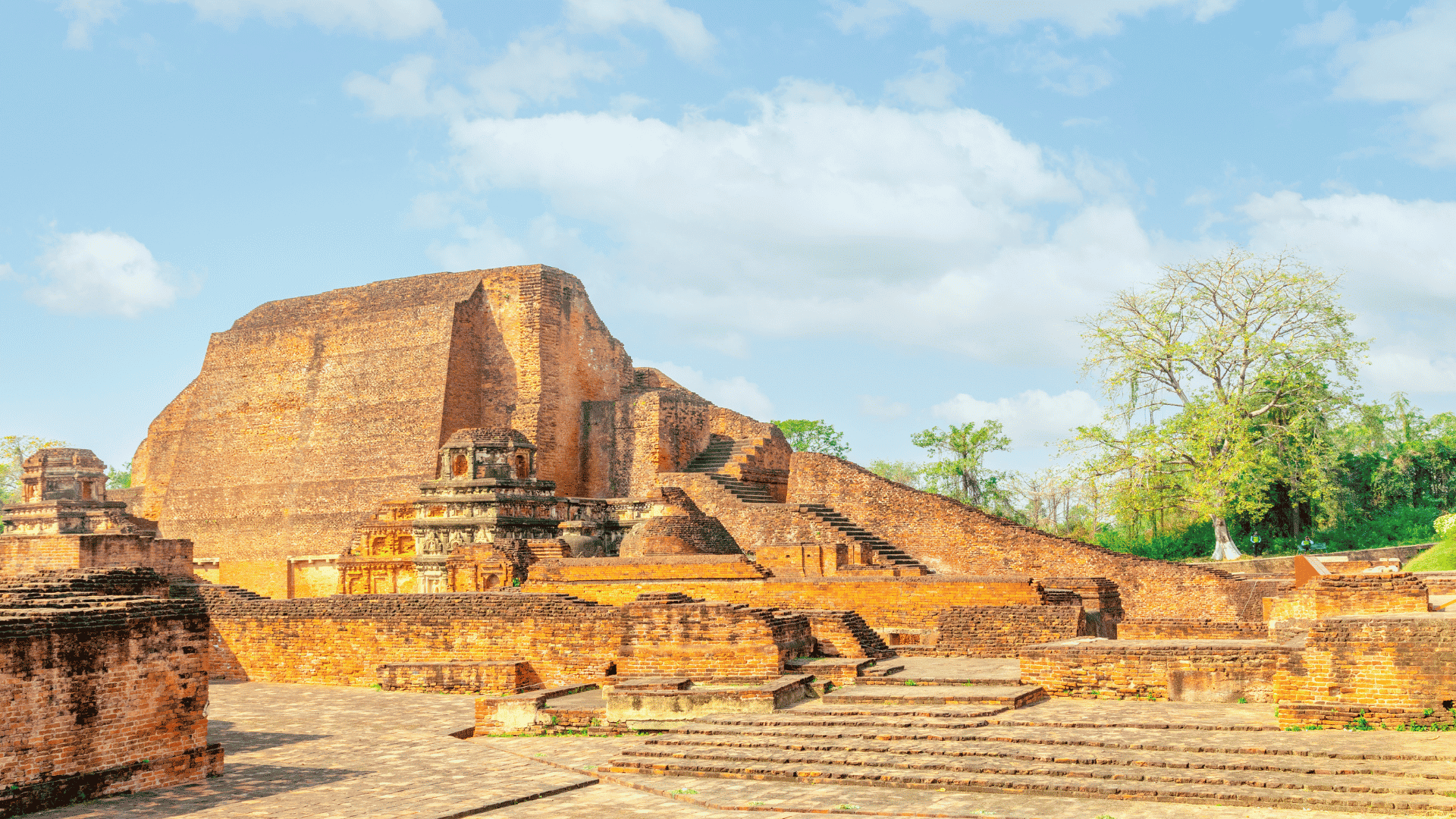
There is a softness in Nalanda that the photographs never capture. The red bricks hold the warmth of the morning sun. The grass between the monasteries is cropped low. A monk passes by, robes the color of saffron against the rust of ancient walls. Somewhere, a child’s voice carries on the wind.
This is Nalanda Mahavihara—not a museum, not a relic, but a living memory of what the Dhamma once built. For more than 700 years, this was where the brightest minds of Asia came to learn, debate, and meditate. Today, pilgrims from Thailand, Sri Lanka, Japan, and beyond come not for spectacle but for stillness.
This guide is for the traveler who wants to understand Nalanda before they walk it—its origins, its great teachers, its tragedy, and its quiet rebirth.
The Place the Buddha Knew Long Before the University Existed
Most travelers think of Nalanda as a university first. But for the Buddha, Nalanda was simply a flourishing town in the kingdom of Magadha—a place he visited many times during his teaching years in the 6th century BCE.
The Buddha rested in the Pavarika Mango Grove here, where he delivered teachings recorded in the Pali canon. More personally, this is the homeland of Venerable Sariputta—the disciple known as the General of the Dhamma, second only to the Buddha himself in wisdom. Sariputta was born in the nearby village of Nalaka, and it was at Nalanda that he later passed into Parinirvana.
Standing today at the Sariputta Stupa—the largest structure on the site—pilgrims feel something words cannot reach. This is older than the university. Older than the libraries. It is the ground itself that is sacred.
A Quiet Tip: Light a candle or offer flowers at the Sariputta stupa before exploring the rest of the ruins. Many Thai pilgrims pause here for a few minutes of silent reflection.
How a Monastery Became the Greatest University of the Ancient World
In the 5th century CE, Emperor Kumaragupta I of the Gupta dynasty established a formal monastic institution at Nalanda. Over the next two centuries, successive rulers — Buddhagupta, Tathagatagupta, Baladitya, and especially Harshavardhana — expanded it into something the world had never seen.
By the 7th century, Nalanda Mahavihara was a city within a city. Eight separate compounds, ten temples, meditation halls, classrooms, gardens, and lakes were arranged in careful symmetry. Around 10,000 monks and 2,000 teachers lived here together — a daily rhythm of chanting, study, debate, and silent practice.
What made Nalanda unique was its admission process. According to the Chinese pilgrim Xuanzang, only two out of every ten applicants passed the entrance debate at the gate. Even kings sent their sons hoping they would qualify.
Subjects taught here went far beyond Buddhism—logic, grammar, medicine, mathematics, astronomy, philosophy, and the arts. It was not a separation of sacred and worldly knowledge. It was integration.
The Library That Burned for Three Months
Of all the stories of Nalanda, the one most pilgrims remember is that of the library.
It was called Dharma Gunj—the “Mountain of Truth.” Three towering buildings made up the complex: Ratnasagara, Ratnadadhi, and Ratnaranjaka. The Ratnadadhi rose nine stories into the sky. Together they held what Tibetan records call 9 million manuscripts—sutras, commentaries, treatises, and treatises on treatises.
Monks from China and Tibet did not just visit Nalanda to study. They came to copy texts to take home. Much of the Mahayana tradition that flourished across East Asia was preserved through these careful manuscripts carried out of Nalanda’s gates.
Then came 1193 CE. The Turkic invader Bakhtiyar Khilji attacked Nalanda. Monks were killed. Buildings were torn down. The library, it is said, burned for three months.
What was lost is impossible to measure. But what survived—the texts that had already travelled to Tibet, China, Korea, and Southeast Asia—became the foundation of the Buddhist world we know today. In a strange way, Nalanda gave more in its destruction than many institutions give in their flourishing.
The Voices That Carried Nalanda to the World
Three names, in particular, kept Nalanda alive across centuries:
Xuanzang (Chinese, 7th century): Spent over five years studying at Nalanda. His travel records—Great Tang Records on the Western Regions—are still the most detailed account of the university we have. Without him, Nalanda’s daily life would be lost.
Yijing (Chinese, late 7th century): Followed Xuanzang and stayed ten years. His writings describe the monastic rules, food, dress, and ceremonies of Nalanda in beautiful detail.
Atisha Dipankara (11th century): A great abbot of Nalanda who later traveled to Tibet, where his teachings shaped the Kadam tradition and influenced Tibetan Buddhism for the next thousand years.
For Thai Buddhists, these names matter because the texts and teachings that traveled from Nalanda eventually shaped Theravada and Mahayana traditions throughout Southeast Asia—including the Dhamma practiced in temples across Thailand today.
What You Will Actually See When You Visit Today
Walking the site today, here is what awaits:
- Sariputta Stupa (Temple Site 3): The largest and most sacred structure. Climb the surrounding stairs slowly. The carvings on the lower terraces show Buddha images in remarkable detail.
- Monastery Sites 1–11: Roofless brick compounds where monks once lived in tiny cells. Each one has a central courtyard with a well.
- Nalanda Archaeological Museum: Just outside the main site. Holds Buddha statues, bronze figures, and excavated artifacts. Allow 45 minutes.
- Hsuan Tsang Memorial Hall: A peaceful pavilion honoring Xuanzang, with murals depicting his journey.
- Nava Nalanda Mahavihara & New Nalanda University: Modern continuations of the ancient tradition, reborn in 2014 with the support of countries including Thailand, Japan, Korea, and Singapore. A beautiful reminder that the lamp was never fully extinguished.
Walking Tip: Wear comfortable shoes. The site is larger than it appears. Carry water — there is little shade once you walk into the monastery compounds.
Planning Your Pilgrimage: Nalanda on the Buddhist Circuit
Nalanda is best experienced as part of a flowing journey through Bihar’s sacred Buddhist landscape. Most of our Buddhist tour packages connect it naturally with:
- Bodh Gaya (95 km away) — where the Buddha attained enlightenment
- Rajgir (15 km away) — where the Buddha taught for many years and where the First Buddhist Council was held
- Vaishali — site of the Second Buddhist Council
- Varanasi & Sarnath—sacred Ganges city and the place of the First Sermon
A typical pilgrimage of 8 to 12 days allows time to walk Nalanda without rushing, attend morning chanting at Bodh Gaya, and offer respects at Sarnath.
Prime Value Tours, with 25+ years of experience and recognition by the Ministry of Tourism, Government of India, and IATO, specializes in Thai-speaking pilgrim groups with vegetarian meals, comfortable transport, and guides who understand the spiritual depth of each site.
For deeper planning, see our full Buddhist pilgrimage guide for India and Nepal.
Frequently Asked Questions
Q: Is Nalanda University the same as the new Nalanda in Rajgir? A: They are different but related. The ancient Nalanda Mahavihara is the archaeological site near Bihar Sharif. The new Nalanda University, opened in 2014, is a modern institution in nearby Rajgir town inspired by the original. Most pilgrim tours visit both.
Q: Do I need a guide to understand Nalanda, or can I explore alone? A: You can walk the ruins on your own, but much of the meaning is lost without context—many monasteries look similar without a guide. Our Thai-speaking guides at Prime Value Tours bring the history to life in your language. You can plan your visit with us easily.
Q: Is photography allowed inside Nalanda? A: Yes, photography is permitted at the main archaeological site. However, please be respectful—avoid climbing on monuments and keep voices low near the Sariputta Stupa where pilgrims often pray.
Q: What kind of food is available near Nalanda for Buddhist pilgrims? A: Most pilgrim groups eat at Rajgir or Bodh Gaya, where vegetarian and Buddhist-friendly food is widely available. Our tours arrange all meals in advance, including Thai-style vegetarian options when requested. More details are on our FAQ page.
Q: Can elderly pilgrims comfortably visit Nalanda? A: Yes, with proper planning. The site is flat but spread out. We arrange shorter walking routes, vehicle access close to the entrance, and rest breaks for senior pilgrims. Many of our regular Thai groups include elderly members.
Begin Your Sacred Journey
Some places you visit. Nalanda, you remember.
For over 25 years, Prime Value Tours has walked beside Buddhist pilgrims through the sacred landscape of India—from the Bodhi Tree to the Sariputta Stupa, from the deer park of Sarnath to the silent shores of Lumbini.
If something in this story has called to you, we would be honored to help shape your journey. Reach out to us — there is no obligation, only a quiet conversation about what your pilgrimage could become.