Best Time to Visit Buddhist Pilgrimage Sites in India: A Month-by-Month Planning Guide
When to Visit Bodh Gaya, Sarnath, Kushinagar, Lumbini & Varanasi
India’s Buddhist pilgrimage circuit spans thousands of kilometers across multiple states, from the plains of Bihar to the Terai of Nepal. 😎👍 The journey takes pilgrims to four sacred sites identified by the Buddha himself—and to several other places of deep spiritual significance along the way. Planning when to go is one of the most important decisions a pilgrim makes.
The good news: India’s Buddhist sites are beautiful and accessible for much of the year. The less good news: the Indian subcontinent has distinct seasons that make a real difference to comfort, crowd levels, road conditions, and the overall quality of a pilgrimage. This guide takes you through each month and each site, so you can plan your journey with confidence.
For fully planned Buddhist circuit tours with expert guides, Prime Value Tours—government of India approved, based in Varanasi, with 25+ years of experience—handles all logistics so you can focus on what matters most.
Quick Reference: Best Time by Season
Use this table for a fast overview before reading the detailed guide below:
| Season | Months | Conditions |
| Peak Season ✅ | October – March | Best weather, 10–28°C, all sites fully accessible, busy |
| Buddha Purnima ⭐ | May (full moon) | Most sacred day—huge crowds, book 6 months ahead |
| Shoulder Season | September / April | Warm, fewer crowds, good for smaller groups |
| Avoid ❌ | May – August | Very hot (40°C+) or monsoon rains affect some roads. |
Peak Pilgrimage Season: October to March
October to March is, without question, the best time to visit Buddhist sites in India for most pilgrims. This six-month window offers the most comfortable weather across all sites on the circuit — from Varanasi and Sarnath in the north to Bodh Gaya in Bihar and Kushinagar in eastern Uttar Pradesh.
October & November — Ideal for Smaller Groups
The monsoon has ended. The countryside is green and lush. Temperatures sit at a very comfortable 20–30°C. October and November are excellent months for smaller pilgrim groups and independent travelers who prefer fewer crowds. Accommodation is easier to book, and you will often have quiet, unhurried time at the sacred sites.
What to expect at Bodh Gaya: The site is calm and contemplative in October. By November, larger international groups begin arriving. The Kalachakra Puja — if scheduled this year — typically falls in November or December at Bodh Gaya and draws tens of thousands of pilgrims from across the world.
December & January — Peak Season, Most Atmosphere
December and January are the busiest and most vibrant months at India’s Buddhist pilgrimage sites. The weather is at its most pleasant—cool and clear, with temperatures between 10°C at night and 22°C in the afternoon. The sites are alive with pilgrims from Thailand, Japan, Sri Lanka, Myanmar, Taiwan, and beyond.
At Bodh Gaya, this is the time when the international Buddhist community is most fully gathered. Thai temple ceremonies, Tibetan pujas, Japanese chanting groups, and Sri Lankan pilgrims in white robes all converge on the Mahabodhi Temple. The atmosphere is extraordinary — a living, breathing expression of the global Buddhist sangha.
Important: Accommodation fills rapidly in December and January. Book your tour, hotel, and transport at least 3–4 months in advance for this period.
📷 Bodh Gaya December pilgrims — Caption: ‘International Buddhist pilgrims gathering at the Mahabodhi Temple, Bodh Gaya in peak season, December.’ — Alt: ‘Buddhist pilgrims Bodh Gaya, India.’ December peak season’
February & March — Pleasant and Increasingly Peaceful
By February, the large December–January pilgrim groups have returned home, and the circuit becomes quieter, but the weather remains beautiful. March brings the first warmth of spring, and the mustard fields of Bihar blaze yellow around Bodh Gaya and Nalanda. This is a wonderful time for pilgrims who prefer a more contemplative, unhurried journey.
Special Dates: Buddhist Festivals and Sacred Occasions
Buddha Purnima — The Most Sacred Day of the Year
Buddha Purnima is the single most important date in the Buddhist calendar—the full moon day of the month of Vaisakha (usually in May) that commemorates the Buddha’s birth, his enlightenment, and his Parinirvana, all said to have occurred on the same day of the lunar calendar.
At Bodh Gaya on Buddha Purnima, hundreds of thousands of pilgrims gather at the Mahabodhi Temple. The site is illuminated with oil lamps and incense. Monks lead chanting that continues through the night. The Government of India and the Bihar state government organize major cultural and religious programs. It is a deeply moving and spiritually overwhelming experience.
Planning note: Buddha Purnima is extraordinary — but it requires planning 6 to 12 months in advance. Hotels and guesthouses in Bodh Gaya book out entirely. Your tour operator must secure all arrangements early. If you wish to attend, contact Prime Value Tours well ahead of time.
Magha Puja — February
Magha Puja falls in February and commemorates the occasion when 1,250 monks spontaneously gathered before the Buddha without prior appointment. For Thai Buddhists, Makha Bucha (as it is known in Thai) is one of the most important annual observances. Being at Bodh Gaya or Sarnath on this day carries profound meaning.
Asalha Puja — July
Asalha Puja marks the Buddha’s first teaching at Sarnath. Being at Sarnath on Asalha Puja (July, full moon) is spiritually powerful—though the weather in July is hot and humid. Hardy pilgrims who choose this date are rewarded with deep meaning and far fewer crowds.
📷 Sarnath Dhamek Stupa — Caption: ‘The Dhamek Stupa at Sarnath, where the Buddha gave his first teaching—a key stop on the Buddhist circuit India.’ — Alt: ‘Dhamek Stupa Sarnath Buddhist pilgrimage India best time’
Site-by-Site Seasonal Guide
Bodh Gaya — Best: November to February
Bodh Gaya is in the Gangetic plains of Bihar, which means very hot summers (April–June, 40°C+) and mild winters (December–February, 10–22°C). The sacred site is outdoors, with significant walking. November to February offers the best balance of weather and atmosphere. Avoid April–June entirely if possible.
Sarnath — Best: October to March
Sarnath, near Varanasi in Uttar Pradesh, has a similar climate to Bodh Gaya. October to March is the ideal window. The archaeological park, stupas, and museum are all outdoors or in large open buildings, making temperature an important consideration. The Sarnath Archaeological Museum is open year-round.
Kushinagar — Best: November to February
Kushinagar in eastern Uttar Pradesh is deeply peaceful and relatively uncrowded compared to Bodh Gaya and Sarnath. November to February is best. The sacred grove around the Mahaparinirvana Temple is an outdoor site. December and January evenings can be cool—bring a warm layer for early morning or evening visits.
Lumbini, Nepal — Best: October to March
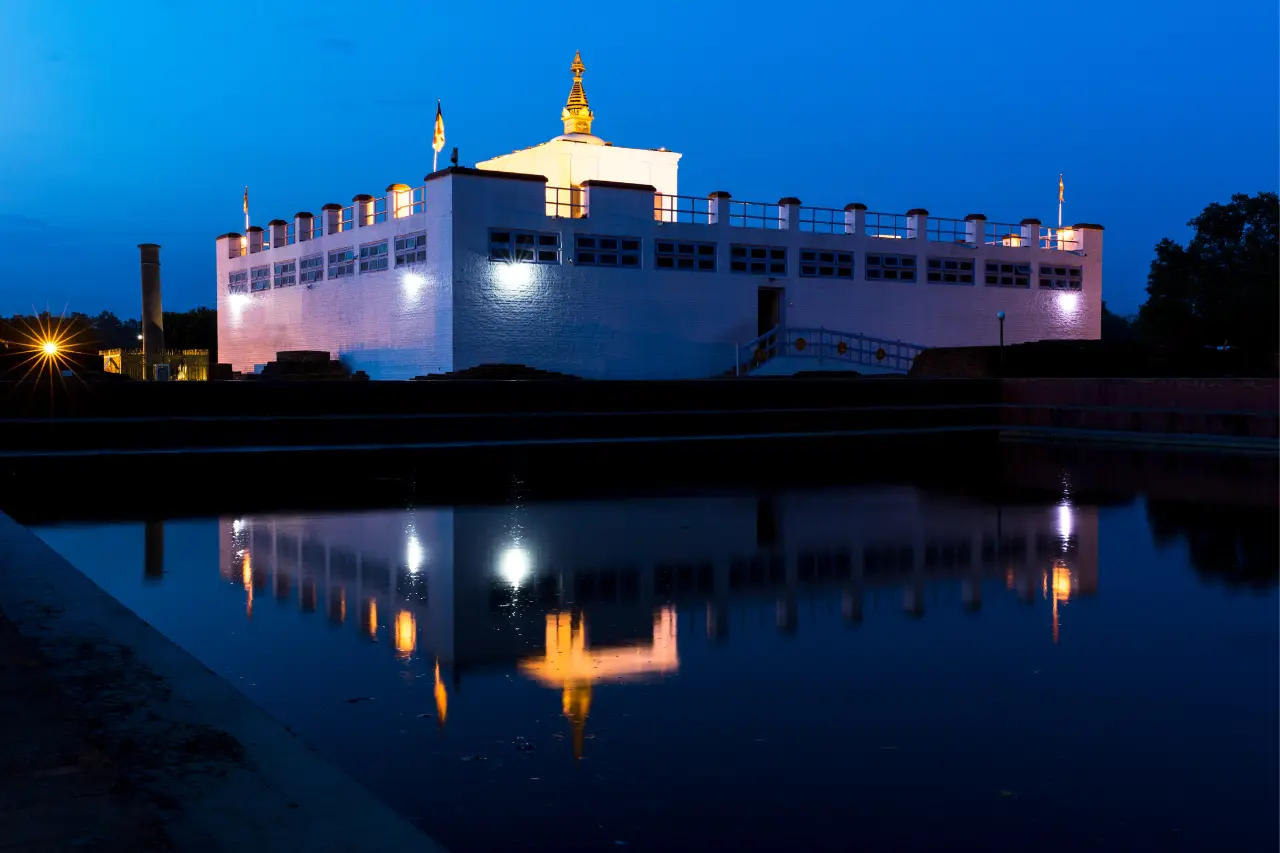
Lumbini has a subtropical climate that is hot in summer and cool in winter. October to March is comfortable and pleasant. The Sacred Garden and monastic zones are outdoor spaces requiring significant walking. Lumbini is typically visited as part of the extended Buddhist circuit—usually a 2-day extension from Kushinagar.
Varanasi—Year-Round, Best: October to March
Varanasi is the circuit’s gateway city and is worth visiting year-round—the Ganga Aarti ceremony at the ghats is conducted every single evening regardless of season. October to March offers the most comfortable experience. Monsoon season (July–September) floods some of the lower ghats, but the city itself is fully functional.
How to Choose the Right Time for Your Group
The best time for your Buddhist pilgrimage circuit in India ultimately depends on your group’s priorities—spiritual calendar, weather preference, crowd tolerance, and flexibility. Prime Value Tours can help you match your dates to the right itinerary.
For Thai Buddhist groups who wish to travel during a specific Thai Buddhist festival—Makha Bucha, Visakha Bucha, or Asalha Bucha—Prime Value Tours can design an itinerary that aligns your India/Nepal dates with the relevant sacred occasion at each site.
See the full range of Buddhist circuit tour packages and the comprehensive planning guide at primevaluetours.com.
Frequently Asked Questions — When to Visit Buddhist Sites India
Q: What is the single best month to visit Bodh Gaya?
A: December and January offer the best combination of pleasant weather, vibrant pilgrimage atmosphere, and fully operational services. If you prefer quieter conditions, February is an excellent choice with similar weather and far fewer visitors.
Q: Is it possible to do the Buddhist circuit in summer (April–June)?
A: It is possible but not recommended. Temperatures at Bodh Gaya and Kushinagar regularly reach 42–45°C in May and June. The sites are outdoors and require considerable walking. Only very committed pilgrims traveling specifically for Buddha Purnima (usually May) should plan for this period—and they should book several months ahead.
Q: When should a large Thai group of 30+ pilgrims book their circuit tour?
A: For December or January travel, book at least 4–6 months in advance. For Buddha Purnima (May), 6–12 months are essential. Contact Prime Value Tours as early as possible—hotels along the circuit fill quickly, especially in Bodh Gaya.
Q: Is Lumbini (Nepal) included in most Buddhist circuit tours from India?
A: Yes. Most standard circuit tours from Varanasi include Lumbini as a 2-day extension from Kushinagar. A Nepal entry visa is required — Thai passport holders can obtain this on arrival at the border. See the full Buddhist pilgrimage guide, India & Nepal, for details.
Q: What should I pack for a Buddhist circuit in December?
A: December evenings can be cold (8–12°C) in Bodh Gaya and Varanasi. Pack: light warm layers (a down jacket or wool sweater), modest clothing for temple visits (shoulders and knees covered), comfortable walking shoes or slip-ons for barefoot temple visits, a small backpack, sunscreen, and a personal first-aid kit.
Plan Your Buddhist Pilgrimage with Confidence
The right season makes a sacred journey even more beautiful. But more important than the weather is who walks beside you—experienced guides who know every road, every site, and every spiritual nuance of this ancient circuit. At Prime Value Tours, that is what we offer.
Begin planning your Buddhist circuit tour today →
Contact & Booking
Prime Value Tours Pvt. Ltd. — Specialists in Buddhist Pilgrimage Circuits
Government of India Approved Tour Operator | Est. 2000 | 25+ Years
E8-Shanti Vihar, Jail Road, Shivpur, Varanasi, UP – 221003, India
Mobile / WhatsApp: +91-9794122849
Email: info@primevaluetours.com
Website: www.primevaluetours.com